Average Reviews:

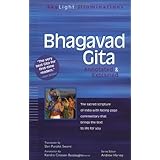
(More customer reviews)Are you looking to buy Bhagavad Gita: Annotated & Explained (SkyLight Illuminations)? Here is the right place to find the great deals. we can offer discounts of up to 90% on Bhagavad Gita: Annotated & Explained (SkyLight Illuminations). Check out the link below:
>> Click Here to See Compare Prices and Get the Best Offers
Bhagavad Gita: Annotated & Explained (SkyLight Illuminations) ReviewIn my experience Kendra Crossen Burroughs is one of the best editors in the field of Eastern spiritual literature and texts. As well as working freelance, she has been a long-term editor on the staff of Shambhala Publications, and I was happy to have her involved in a book that I had published by Shambhala, although not a book in Eastern thought.I was very excited when I heard that Kendra was doing this book for Skylight Paths, since the Gita has been one of my, and many other people's favorite and most important spiritual sources, and I eagerly looked forward to its appearance. If I wasn't one of the first people in the world to buy a copy, at least I was one of the first on my block.
I was not disappointed. If I was, I would have never written this review. A blurb on the cover by renowned authority, Ken Wilber, says, "The very best Gita for first time readers." This is one of the rare occasions when a blurb is absolutely true. But, the further truth is that Burroughs's annotations make this a book for the experienced reader of the Gita as well. Burroughs has consulted and used over twenty other translations in her annotations to this particular translation that she uses, the 1935 one by Shri Purohit Swami, and this scholarship, plus Burroughs' own personal experience, make this a valuable book for a reader of any degree of experience.
Besides Burroughs' own brilliant annotations, Skylight has done an innovative and equally brilliant job of format, where the annotations are on one page, and the reference text is on the facing page, so that the reader has the annotations right at hand as s/he reads, and does not have to thumb through to the back of the book or chapter to look them up. The only problem that I encountered with this was my own idiosyncratic one of whether to read the text page through and then turn to the annotations alongside it, or read each annotation as it is referred to in the text. I never completely settled this for myself. Other readers may want to read the annotation page first, and then read the facing page of the Gita text.
As Burroughs notes, the Purohit translation is a good first time one, because he purposely set out to eliminate all foreign words of the Indian Sanskrit language, and uses only terms familiar to the Western, English speaking reader. For myself, however, who is not a newcomer to Eastern thought (though certainly not a Gita scholar at all), I am less happy with this choice. I want to know what the key Sanskrit terms are in the Gita text, which have a meaning and connotation that is at least somewhat different than the familiar English terms used. For example, in the famous and central verses (Ch 4: 7-8) where Krishna tells his disciple Arjuna about who he is and the reason for his periodic appearance in human history, the Purohit text has it, "To protect the righteous, to destroy the wicked, and to establish the kingdom of God, I am reborn from age to age." The very Christian phrase "the kingdom of God," could easily throw off the reader. The Sanskrit actually says, "for the establishment of dharma," and thus it connects with the whole Indian sense of truth and untruth (dharma and adharma), more abstract and general, and later carried with such powerful effect into Buddhism. In 1935 "the Kingdom of God" might have worked better, but in our time, dharma says more, and more accurately to many of us. However, Burroughs' annotations corrects or overcomes a lot of these problems (but not in this case). So, where the Purohit text says (Ch 6: 23) that meditation "should be practiced with determination and with a heart which refuses to be depressed," Burroughs explains that the actual Sanskrit term is "chetas, a synonym for chitta (mind). In Indian philosophy , 'heart' is considered an aspect of mind, concerned with intuitive understanding and valuation." Gems like this of elucidation and clarification occur throughout the annotation pages facing the text.
What reading this edition of the Gita has prompted me to do, in part related to my issue with the Purohit translation, is to now have three Gita's that I carry side by side, and compare them as I read in it--this one, Prabhavananda/Isherwood, and Nikhilananda's. Burroughs would be happy with this effect on me of her edition, and in this case would consider her work a success. And these three, are one more than the two translations of the Bible that I have on hand.Bhagavad Gita: Annotated & Explained (SkyLight Illuminations) OverviewAn ancient classic that can become a companion for your own spiritual journey.Millions of people turn daily to India's most beloved holy book, the Bhagavad Gita ("Song of the Lord"), to instruct their spiritual practice. A Hindu classic, it has universal appeal for people of all faith traditions who turn to its inspirational support in the struggles of life, its consolation in times of grief, and its deeply moving promise of God's love and guidance.Composed in Sanskrit verse thousands of years ago, this timeless text tells the story of a distraught warrior on the verge of battle and the compassionate counsel he receives from Krishna-God in human form. In just seven hundred lines, the Gita presents concise teachings on such topics as the immortality of the soul, meditation and yoga, worship and sacrifice, the ideal of selfless action, and the oneness of all life in the Divine.Now you can read and understand the Gita with no previous knowledge of Hinduism required. This SkyLight Illuminations edition offers insightful yet unobtrusive commentary that explains references and philosophical terms; shares the inspiring interpretations of famous spiritual teachers; and addresses questions such as the inner meaning of India's caste system and why this sublime discourse on inner peace is set against the background of a violent civil war.Shri Purohit Swami (1882-1941) was an Indian monk who traveled to the West in 1930 to teach the wisdom of Hinduism. In addition to the Bhagavad Gita, he translated The Ten Principal Upanishads (in collaboration with the poet William Butler Yeats).Kendra Crossen Burroughs is a book editor whose specialty is religions of the East and West. She compiled The Essential Ken Wilber and Entering the Tao: Master Ni's Guidance for Self-Cultivation. A long-time student of the Bhagavad Gita, she lives in North Myrtle Beach, South Carolina.--This text refers to the Kindle Edition edition.
Want to learn more information about Bhagavad Gita: Annotated & Explained (SkyLight Illuminations)?
>> Click Here to See All Customer Reviews & Ratings Now

0 comments:
Post a Comment